
Last updated November 21, 2026
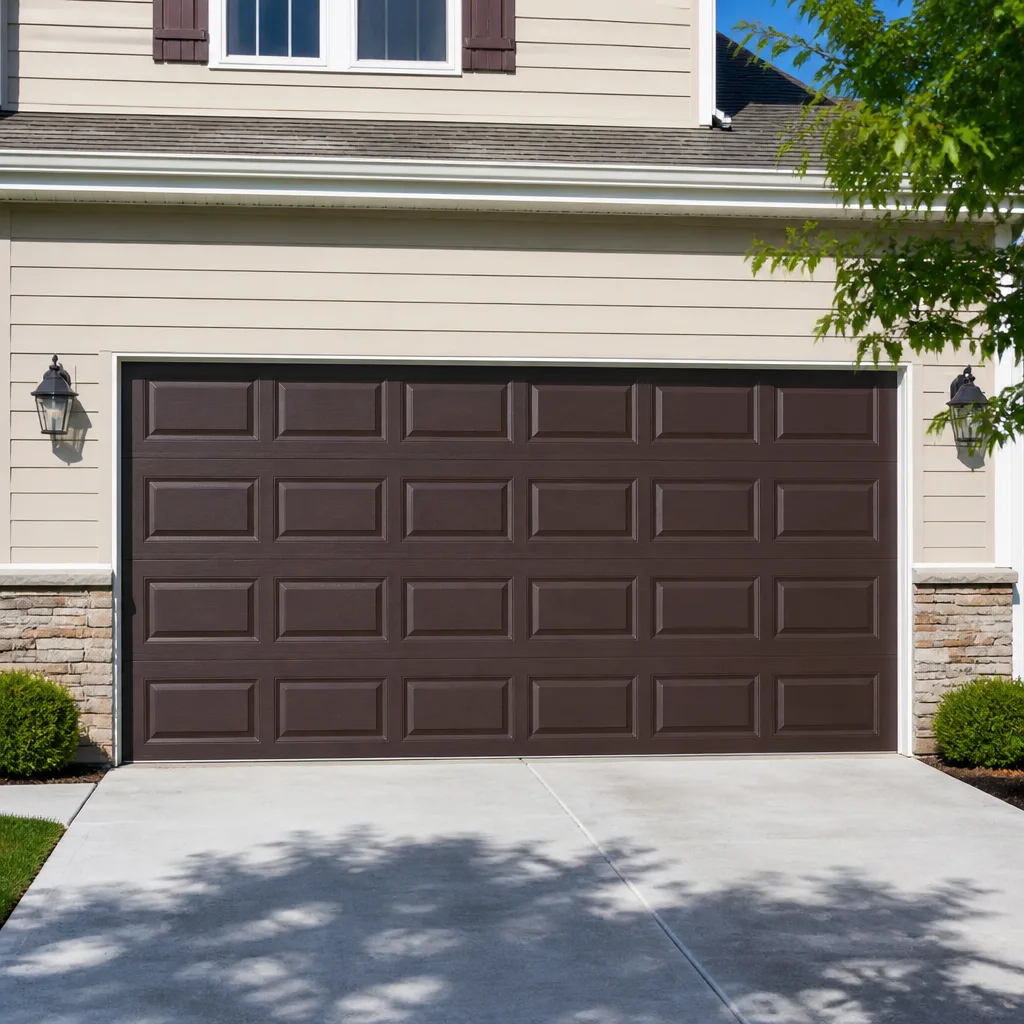 Raised-panel steel
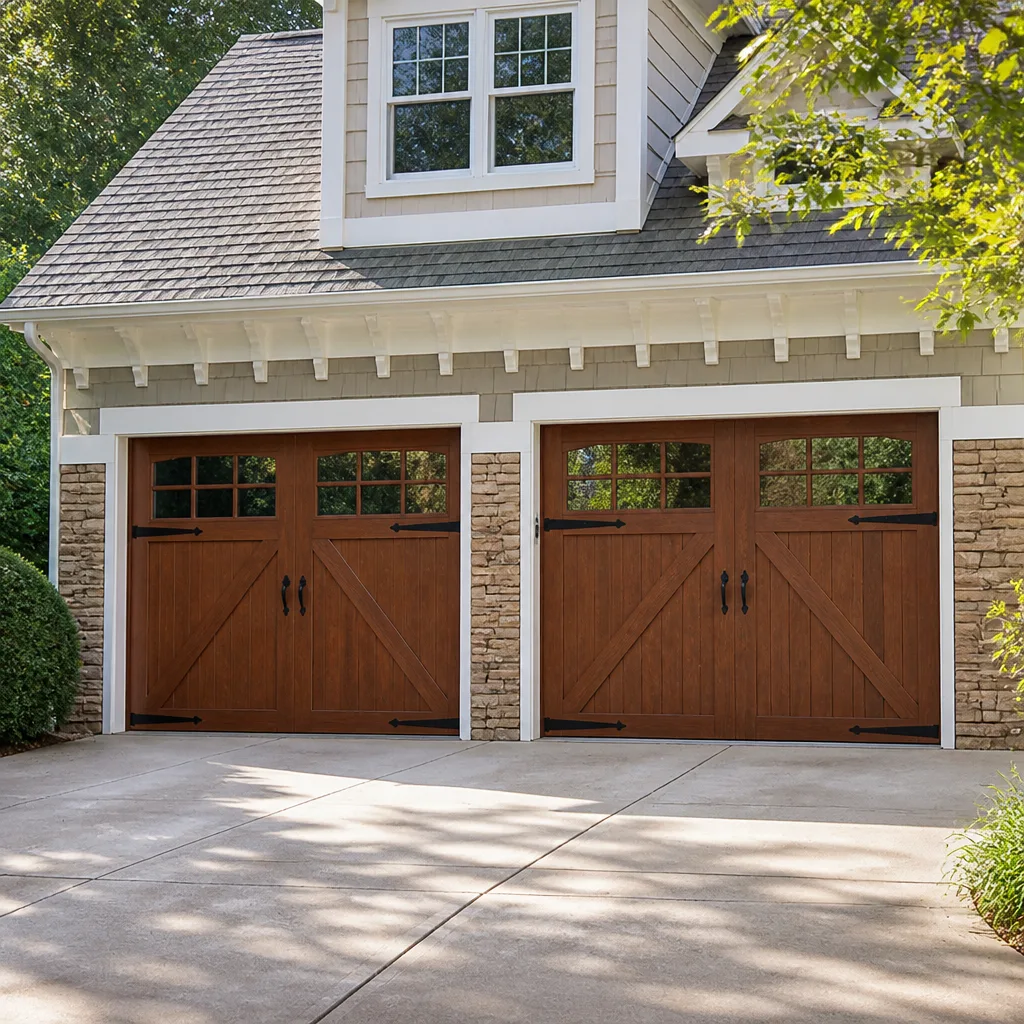 Carriage house
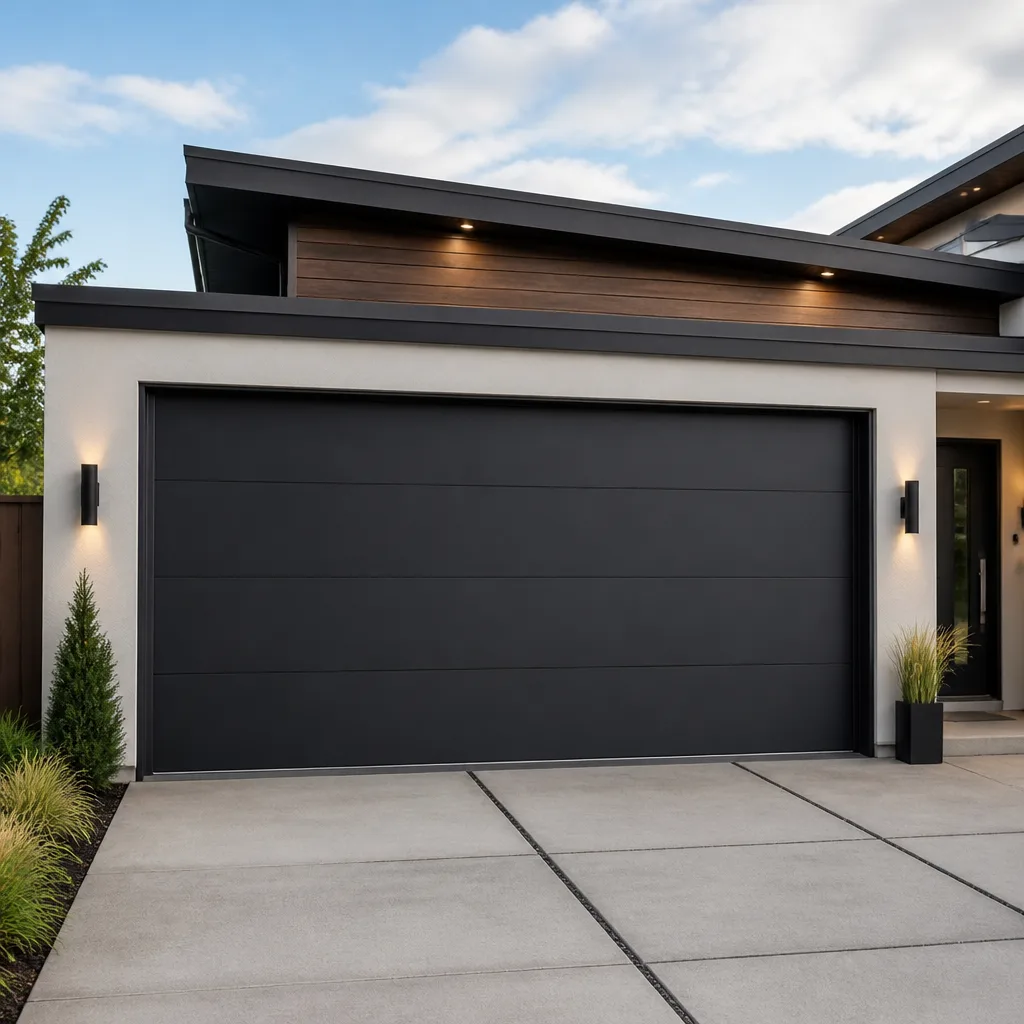 Modern flush
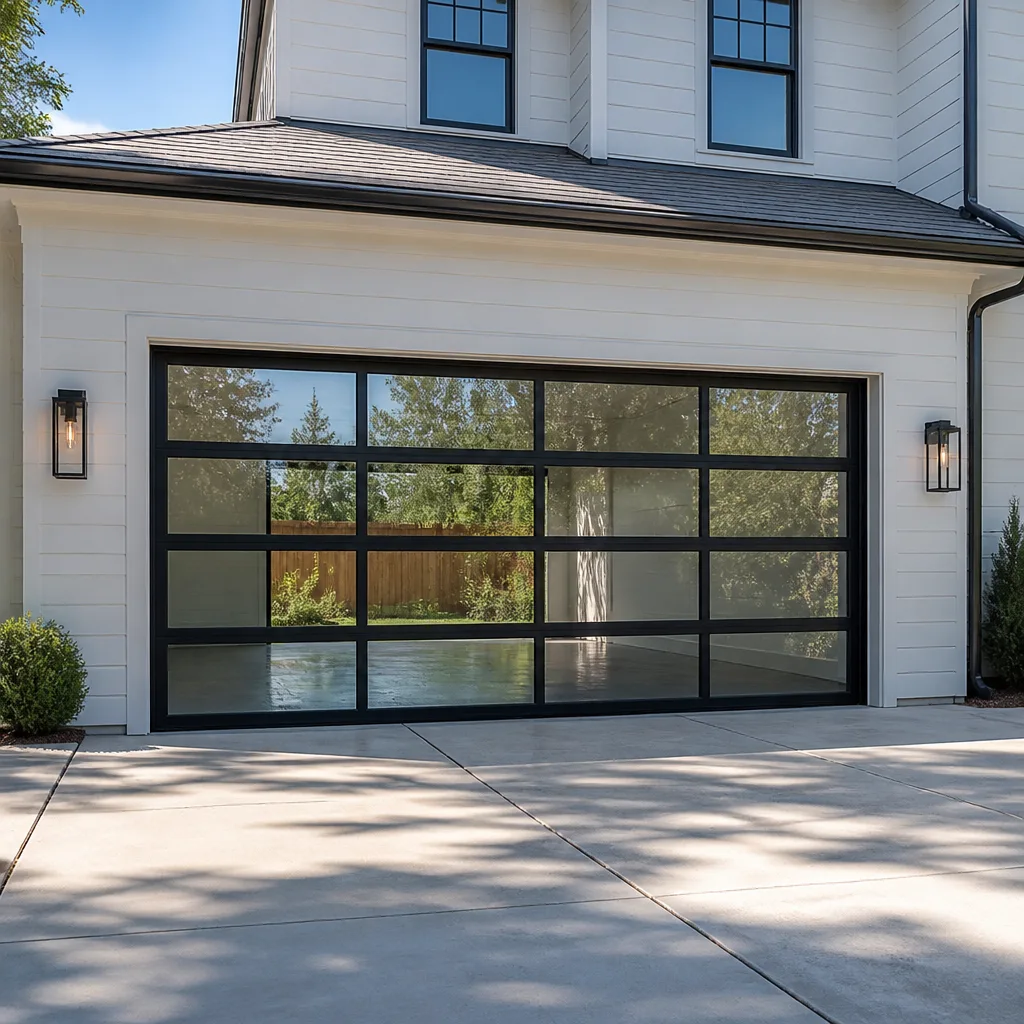 Full-view glass
 LiftMaster openers
 Chamberlain openers
Full 25-point door and opener safety check with every visit - springs, cables, rollers, tracks, and your LiftMaster or Chamberlain opener included
You get a price before we start. It does not change when the pro arrives.
Get your free estimateGarage Door Repair Maintenance Checklist for Brandon Homeowners
The call we get most often after a Brandon summer isn’t about a broken spring. It’s about a door that worked fine in April and won’t budge by August. The opener hums, the door shudders, and somewhere between the heat and the humidity a task that never made it onto the standard checklist quietly gave out. Most maintenance advice you’ll find online was written for a four-season climate, and a lot of it simply doesn’t apply here. This guide is sequenced around the failures technicians actually see in Brandon, Florida – what to check first, what to lubricate and how often, and which visible warning signs matter versus which ones you can ignore. Work through it once and you’ll know your door better than most.
Quick Answer
A garage door maintenance checklist for Brandon should be run every 90 days and focus on humidity-driven problems first: lubricating moving parts with a product that won’t wash out in Florida heat, inspecting hinges and rollers for rust, testing the auto-reverse and photo-eye sensors, and checking cables and springs for visible wear. The single most skipped task here is seasonal lubrication with a heat-stable lubricant, which is why so many doors seize in late summer rather than fail in winter like they do up north.
Styles & brands we work with
- Raised-panel steel
- Carriage house
- Modern flush
- Full-view glass
- LiftMaster openers
- Chamberlain openers
Table of Contents
- Why Brandon’s Climate Rewrites the Standard Checklist
- The Brandon Seasonal Checklist Calendar
- Lubrication: What Works in Florida Heat and What Fails
- The 90-Day Visual Inspection Sequence
- Testing Auto-Reverse and Photo-Eye Sensors Before a Storm
- Cable and Spring Wear Indicators You Can See Without Tools
- Hardware, Tracks, and Weather Seals
- Opener and Smart System Checks
Why Brandon’s Climate Rewrites the Standard Checklist
Brandon winters are mild, which sounds like good news for a garage door and mostly is. The trade-off is that the mild winter never resets the hardware the way a hard freeze does up north. Instead of one brutal season followed by a dormant one, your door runs through a long, warm, humid stretch where the enemies are moisture and heat rather than ice. Those two things attack different parts of the system than cold does, and they attack them slowly enough that most homeowners don’t notice until something stops moving.
Here’s what that means in practice. Heat softens and thins ordinary lubricants, so grease that would hold for a year in a dry climate can dry out or run off in a few months here. Humidity works on the unpainted and plated hardware – hinges, rollers, the track joints, the bolts along the bottom section – and starts the slow oxidation that eventually makes a hinge stiff or a roller squeal. Neither problem announces itself. Both are cheap to prevent and annoying to discover.
There’s a subtler issue too. Doors in Brandon tend to be used heavily because so many homes treat the garage as the main way in and out. A door that opens and closes four or six times a day cycles faster than the manufacturer’s “average use” assumption, which means wear items like rollers and springs reach the end of their life sooner than the calendar suggests. Add summer storms that push a door against wind and rain, and the whole system works harder than a checklist written in a mild, dry climate would ever predict.
That’s the reasoning behind re-sequencing the usual checklist. Instead of starting with the door balance test or the opener, start with the tasks that fail first here: lubrication and rust inspection. Everything else follows.
The Brandon Seasonal Checklist Calendar
Forget spring and fall maintenance tied to freezing temperatures. In Brandon, the useful calendar is built around the wet season, the dry stretch, and the two transitions between them. Here’s how we’d time it.
- Late spring (before the summer rains settle in): Do the full inspection while the hardware is still dry. Lubricate everything, check the weather seal at the bottom of the door, and test the safety reverse. This is the most important window because it sets the door up before humidity peaks.
- Midsummer (the height of heat and afternoon storms): Re-check lubrication, since heat can thin or dry it faster than expected. Look at the bottom seal for cracking, and listen for new noises on the way up and down. Storms are the time to be sure the door closes fully and the sensors are aligned.
- Early fall (as the rainy season eases): Inspect for rust that started over the summer. This is when oxidation that began in the humid months becomes visible. Tighten any hardware that worked loose, and clean the tracks.
- Winter (the mild, dry stretch): This is your best window for a thorough going-over, because the hardware is at its driest and problems are easiest to spot. It’s also a sensible time to schedule a professional tune-up or address anything you noticed during the year.
That gives you four touchpoints a year, with the heaviest attention in the humid months and the deepest inspection in the dry ones. Notice what’s absent: there’s no urgent pre-freeze checklist, because there’s no freeze to prepare for. The risk here is cumulative, not a single cold snap. A door in Brandon rarely fails all at once. It wears down through a long warm season, and the homeowner who keeps an eye on it in July and August is the one who isn’t surprised in September. Neighbors in communities around the Brandon area, from the older streets near downtown out toward the newer subdivisions, all run into the same pattern, because the climate doesn’t respect zip code lines.
Lubrication: What Works in Florida Heat and What Fails
This is the section that matters most, and it’s the one most homeowners get wrong. The lubricant you choose here has to survive heat that softens ordinary products and humidity that can make the wrong product gummy. What works and what fails breaks down fairly cleanly.
What holds up in Brandon heat
- Silicone-based spray lubricant: Stays put in heat, doesn’t attract grit the way heavier grease can, and is the right choice for the hinges, rollers, and bearing plates. It goes on light and stays slick.
- White lithium grease (in moderation): Good for the opener’s drive screw or chain on models that call for grease rather than oil. Use it sparingly – a little goes far, and too much collects dust.
- Purpose-made garage door lubricant: Formulated to resist both heat and moisture. If you’re buying one product and want it to be the right one, this is it.
What fails here
- General-purpose household oil or WD-40 as a stand-in: It’s a decent cleaner and a poor long-term lubricant. It evaporates or thins and leaves parts drier than before.
- Heavy automotive grease: Overkill and counterproductive in warm weather. It holds grit, turns into a sticky paste, and can actually slow the door down.
- Whatever was in the garage from years ago: Old product that’s separated or thickened does more harm than a fresh can of the right stuff.
How to apply it
- Start with a clean door. Wipe the hinges and rollers with a dry cloth so you’re lubricating metal, not dust.
- Spray the hinges at each pivot point, the roller bearings (not the track itself), and the bearing plates at the ends of the torsion bar if your door has one.
- Work the door up and down a few times by hand to spread the lubricant evenly.
- Wipe off any excess so it doesn’t drip onto the door panels or the driveway.
Never lubricate the tracks. The track is meant to stay clean and dry so the rollers can travel freely. Greasing a track attracts grit and makes the door drag. And one safety note before you start: if your door uses torsion springs, the spring itself should never be lubricated or touched. Those springs are under extreme tension and adjusting or even cleaning them the wrong way can cause serious injury. If you’re unsure what type of spring system you have, that’s a question for a trained technician, not a can of spray. Our garage door spring repair service exists precisely because those components deserve a professional’s hands.
On the schedule: lubricate every 90 days in Brandon, and every 60 days during the hottest stretch of summer if the door gets heavy use. That’s more frequent than cold-climate advice suggests, and it’s the single change that prevents the most common summer failure.
The 90-Day Visual Inspection Sequence
You don’t need tools for this, just ten minutes and a routine. Run it in the same order every time so nothing gets skipped. Rust is the thing you’re hunting here, because it starts small and hides in the same places every season.
- Look at the hinges first. Start at the bottom of the door, where moisture and road splash collect, and work up. Any orange or brown dust, flaking, or a hinge that looks pitted means oxidation has started. Pay extra attention to the hinges on the bottom two sections.
- Check each roller. You’re looking for cracks in the nylon or a steel roller that’s begun to rust. A roller that doesn’t spin freely by fingertip is on its way out.
- Inspect the track joints. Where two sections of track meet, look for rust and for any gap or misalignment. A track that’s out of line will wear rollers unevenly.
- Run your eyes along the bottom weather seal. In Brandon this strip takes a beating from sun and summer storms. Look for cracks, tears, or a seal that’s flattened and no longer touching the floor.
- Look at the bolts and brackets. Plated hardware along the door and the wall brackets should be clean. White or greenish residue means moisture has been sitting on the metal.
- Glance up at the springs and cables. You’re not adjusting anything – just looking for rust, fraying, or a spring that looks stretched or has visible gaps between its coils.
If you find a light dusting of rust on a hinge, it’s not a crisis. Clean it, apply a light coat of the right lubricant, and keep an eye on it. What you don’t want to do is ignore a hinge that’s stiffening or a roller that’s seized, because those put extra strain on the whole system and shorten the life of the parts around them. Anything on the springs or cables themselves gets a call to a professional rather than a DIY fix. Rust-prone hardware in Brandon is the norm, not the exception, so this 90-day walkthrough is genuinely worth the ten minutes. When a door needs more than maintenance, our garage door repair team can look at whatever the inspection turns up.
Testing Auto-Reverse and Photo-Eye Sensors Before a Storm
Your safety systems need to work on the day you actually need them, and in Brandon that day usually involves a storm pushing wind and rain under a closing door. Test them now, while it’s calm, so you aren’t discovering a failure when the power’s flickering. Here’s the sequence.
The photo-eye test
- Locate the two small sensors mounted near the floor on either side of the door opening.
- Check that both lenses are clean and pointing at each other. Spiderwebs, dust, and leaf debris are common causes of false trips.
- With the door open, wave an object through the beam while the door is closing. The door should reverse immediately.
- If the door doesn’t reverse, check that the sensors are aligned and that their indicator lights (if yours have them) show they’re communicating. A misaligned sensor is the most frequent cause of a door that closes partway and stops.
The auto-reverse (mechanical) test
- Lay a piece of wood or a brick flat on the floor in the door’s path.
- Close the door and let it contact the object. The door should reverse when it meets resistance.
- If it doesn’t reverse, the opener’s force settings need attention. This is a setting best adjusted by a professional, because too much force defeats the safety feature and too little makes the door behave erratically.
Run both tests every 90 days and always before storm season. If you own a LiftMaster or a Craftsman opener, both systems include these safety features and both can be adjusted – but the adjustment should be made by someone who understands how the force limits interact. On the modern smart-garage openers, you can often check the sensor status from the app, which is a handy first step before you go out to the door. If the safety systems won’t behave, that’s a strong reason to bring in a professional rather than keep resetting them. Our garage door opener repair service covers exactly this kind of sensor and force-setting work on the major brands.
Cable and Spring Wear Indicators You Can See Without Tools
This is where you watch and report rather than touch. Cables and springs are the parts of a garage door that can cause real injury, and the good news is that most wear is visible before anything fails, if you know what to look for. Here’s what matters and what you can safely ignore.
What to look for
- Frayed cables: Look along the length of each cable for broken strands, a fuzzy appearance, or kinks. A cable that’s fraying is weakening and needs to be replaced.
- A spring with visible gaps: On a torsion spring, look at the coils. If you can see clear separation between coils when the door is closed, or the spring looks stretched compared to its neighbors, it’s wearing out.
- Rust on the cable drums and spring coils: In Brandon humidity, surface rust on these parts is a warning that they’re aging faster than they should.
- A door that feels heavy: Lift the door by hand (with the opener disconnected, if you know how to do that safely) and see how it feels. A balanced door lifts with modest effort and stays put when you let go halfway up. One that feels heavy or slams down is a sign the springs are losing tension.
What you can ignore
- A light film of rust on a hinge or bolt: Cosmetic until it starts affecting movement. Clean and lubricate.
- Slight sag in a wood panel: Older wood doors can look a little uneven without being a safety issue. Watch it over time rather than panic.
- Squeak on a single hinge: Lubricate it. If it returns within a week, look at the hinge more closely.
The line is simple: you inspect, you clean, you lubricate, and you report. You don’t adjust, disconnect, or remove anything on the cables or springs. Those parts hold the full weight of the door under enormous tension, and the wrong move can let go suddenly. This is why spring repair is a core service for us rather than an afterthought – a Wayne Dalton torsion system and a Raynor system don’t fail the same way, and a technician who knows the brand knows what to check. If your inspection shows fraying, a gapped spring, or a door that suddenly feels heavy, stop using the door and call a professional.
Hardware, Tracks, and Weather Seals
The parts that don’t move as dramatically still decide whether your door runs quietly and seals out the weather. In Brandon’s humid months, three areas deserve regular attention.
Hinges and rollers
Check that every hinge is tight. Vibration from regular use loosens bolts over time, and a loose hinge lets the door sag and puts uneven pressure on the rollers. Tighten anything that’s working loose with the right wrench, but don’t overtighten – you can strip the hardware. Replace any roller that’s cracked, flat-spotted, or rusted; a set of rollers is inexpensive and changing them restores quiet operation.
Tracks
Wipe the tracks with a damp cloth and dry them. Look for dents, bends, or debris that’s collected in the channel. A bent track will make the door jump or bind, and that’s not something to straighten by force – a misaligned track needs to be reset properly. Keep the tracks clean and dry, and never lubricate them.
Weather seals
The bottom seal takes the worst of what Brandon throws at it: sun, heat, and rain against a closed door. A cracked or flattened seal lets water and insects in and lets cool air out. Check it every season and replace it when it stops touching the floor. The seal around the door’s sides and top matters too, especially if your garage is attached and you notice humidity creeping into the house.
If you own a Clopay or an Amarr door, both are common in this area and both use seals and hardware that are straightforward to replace when they wear out. This is routine maintenance, and it’s the kind of thing a technician can knock out during a tune-up visit if you’d rather not chase down the right replacement parts yourself. It’s also a good moment to look over the whole door with a trained eye, which is what a Brandon Garage Door Repair Pros visit is for.
Opener and Smart System Checks
The opener is the brain of the system, and it deserves a little attention beyond “does it still lift the door.” Modern openers – the LiftMaster and Chamberlain smart systems especially – do a lot behind the scenes, and a few simple checks keep them reliable.
- Listen for changes. A new grinding, clicking, or hesitating sound from the opener is worth investigating before it becomes a failure. Consistency matters more than volume.
- Test the wall control and the remotes. Make sure every remote in the household still works, and replace the batteries on a schedule rather than when they die.
- Check the safety reverse after any opener adjustment. If you change force settings, re-run the mechanical test every time.
- Keep the app updated if you use one. Smart-garage openers benefit from firmware updates, and the app is also a quick way to see whether the door is closed when you’re away.
- Look at the drive system. Chain, belt, and screw drives each have their own maintenance needs. Belts are quiet and generally low-maintenance; chains and screws may want periodic lubrication per the manufacturer’s guidance.
If you’ve added a smart opener or one that connects to your home network, remember that power interruptions during storms can leave settings scrambled. After a big storm passes, test the door and its safety features once. If the opener won’t respond, the app shows an error, or the door behaves erratically, a technician can diagnose the issue faster than trial and error. Our team works across the major opener brands, so whether you’re on a LiftMaster, a Genie, or an older Craftsman unit, the diagnosis starts from a place of familiarity with your specific system.
Common Mistakes to Avoid
- Using whatever lubricant is on the shelf. General household oil and heavy grease both fail in Brandon heat, and some products make things worse by holding grit. Match the lubricant to the part.
- Greasing the tracks. It seems helpful and it isn’t. Tracks stay clean and dry; the rollers need the lubricant, not the track.
- Skipping the inspection because the door “works fine.” Most failures in this climate build up slowly. A door that works today can be two weeks from a seized roller, and the ten-minute walkthrough catches it early.
- Ignoring rust on the bottom hinges. The lowest hinges collect moisture and are where oxidation starts. Clean and lubricate them before the rust spreads to the hardware above.
- Adjusting the opener’s force settings without testing the safety reverse. Any change to force limits has to be followed by a reverse test, or you’ve quietly disabled a safety feature.
- Trying to fix a spring or cable yourself. These parts are under extreme tension, and the risk of serious injury is real. Watch, report, and let a professional handle the repair.
- Following a four-season checklist that doesn’t fit here. Advice built around freezing temperatures misses the heat and humidity that actually cause failures in Brandon. Build the schedule around the local weather, not the calendar on a national website.
See the difference
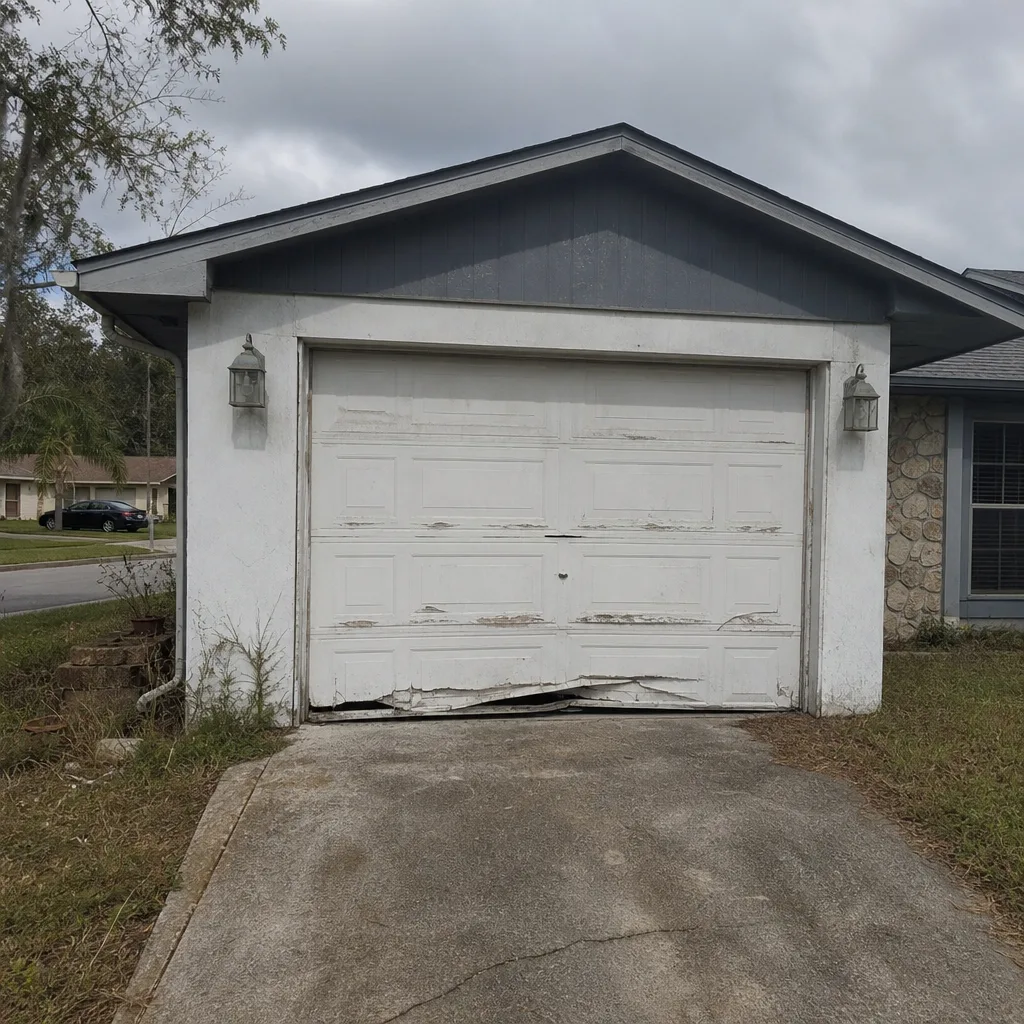 Before
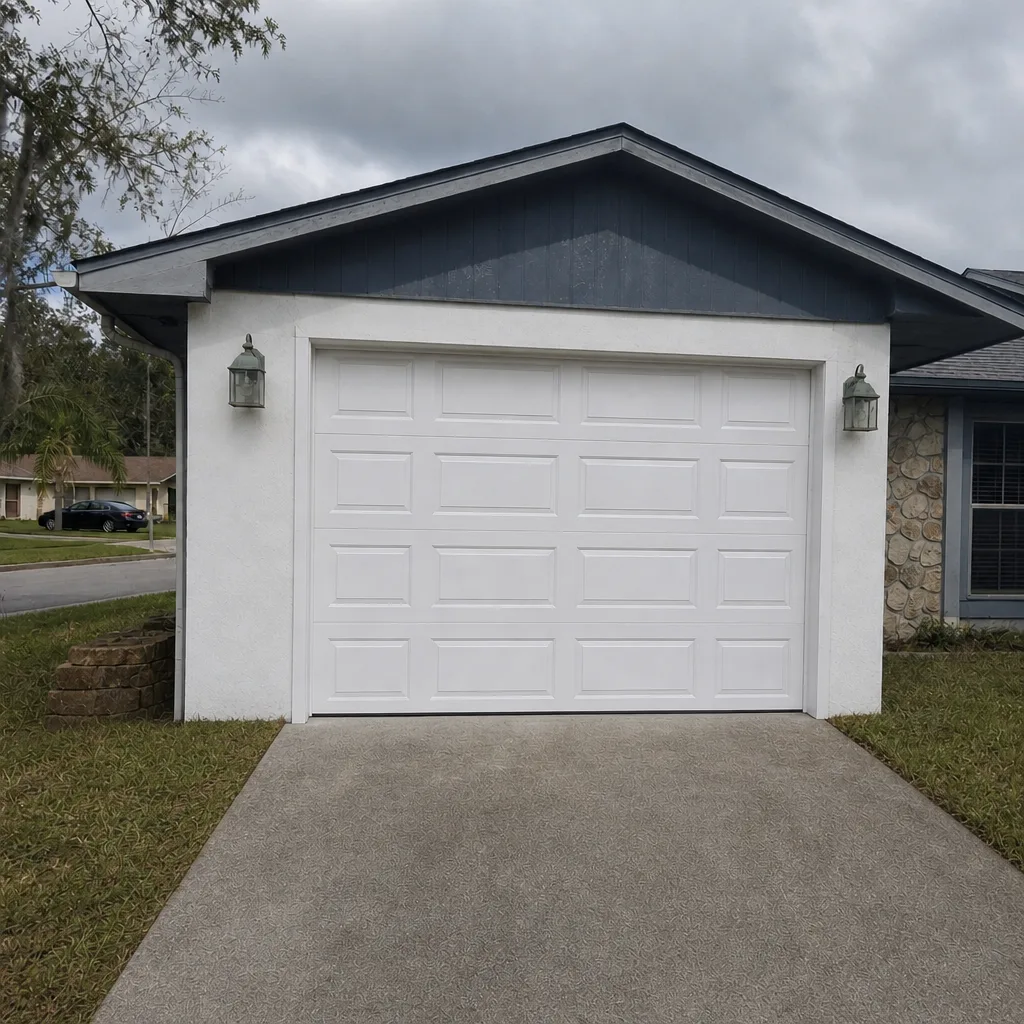 After
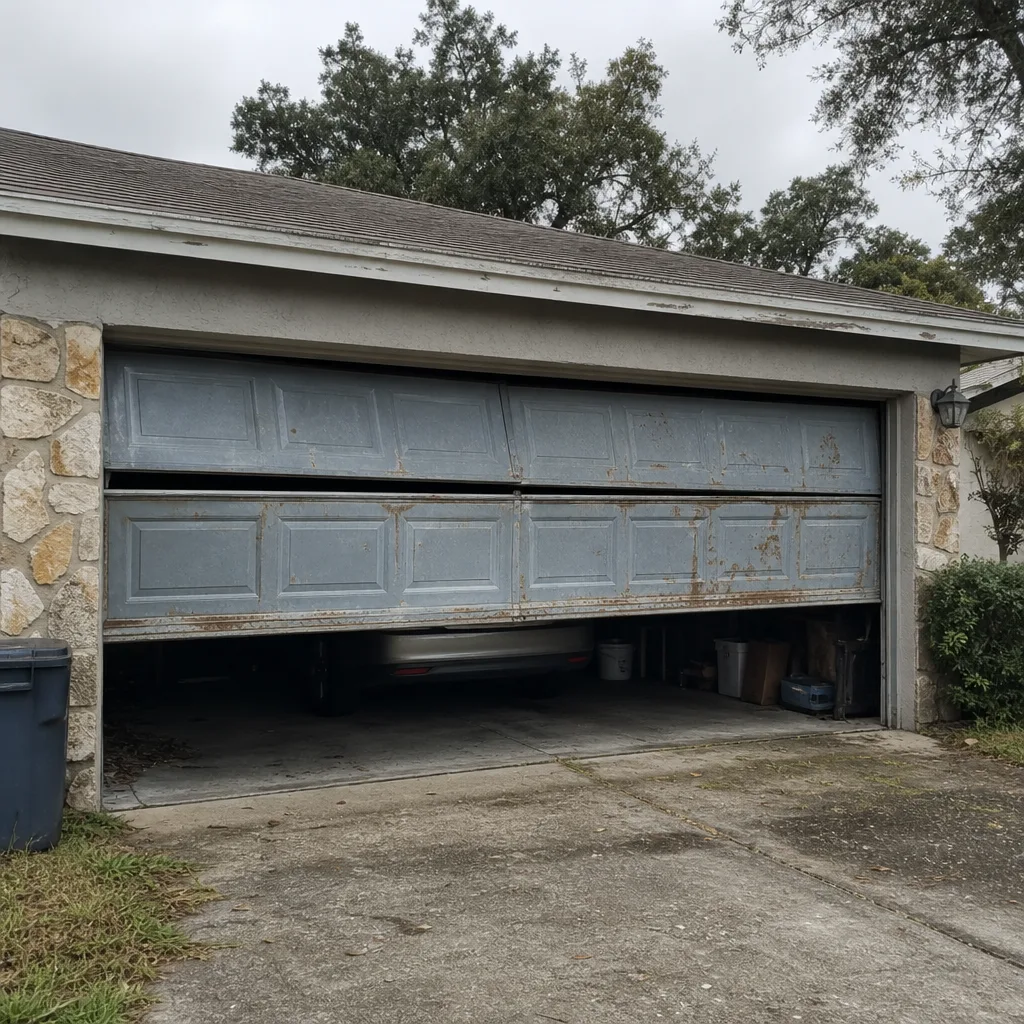 Before
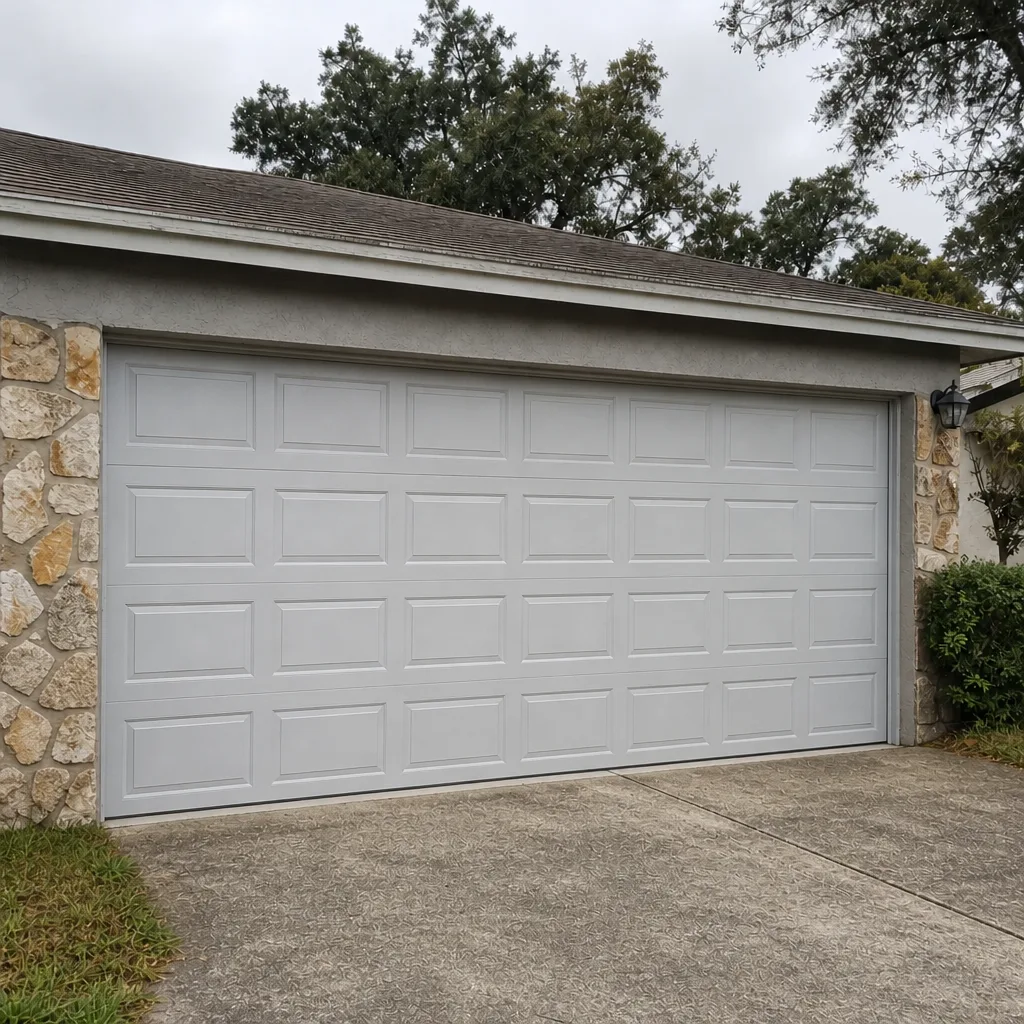 After
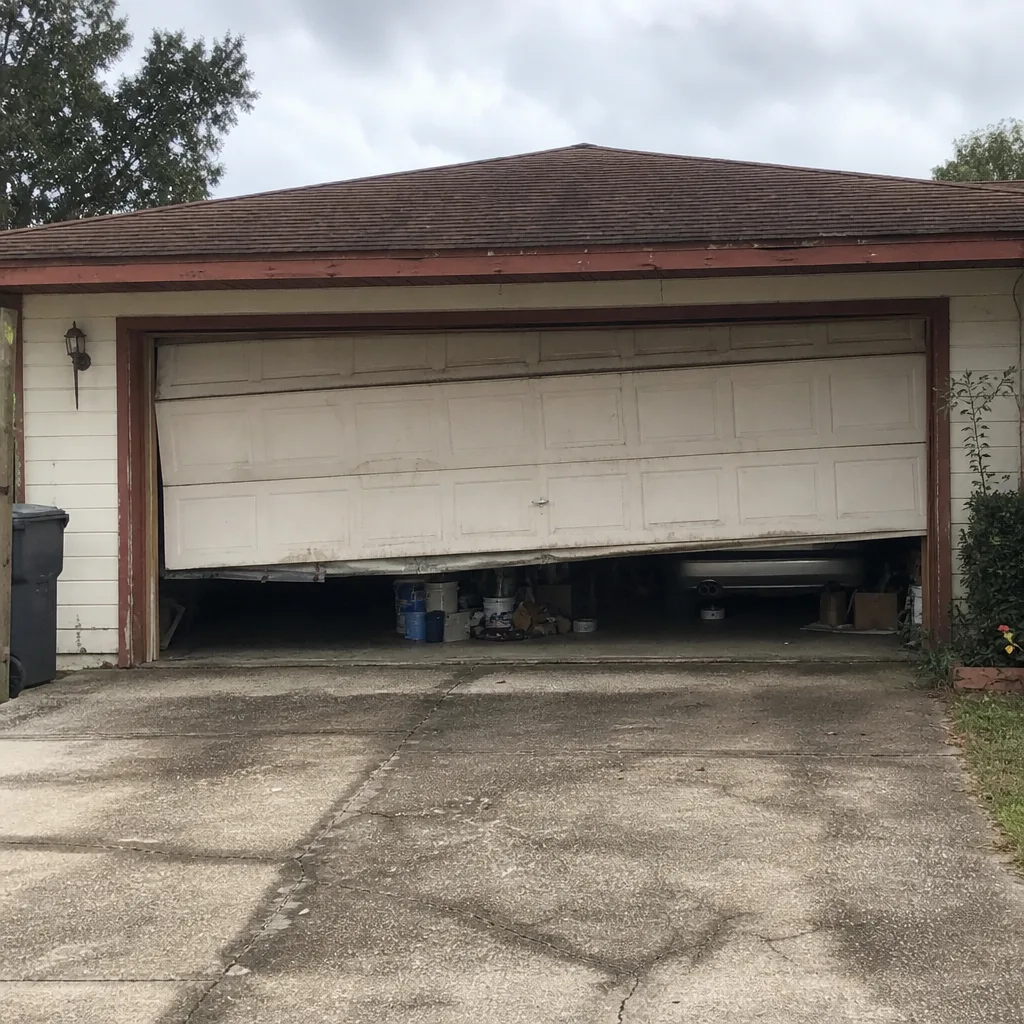 Before
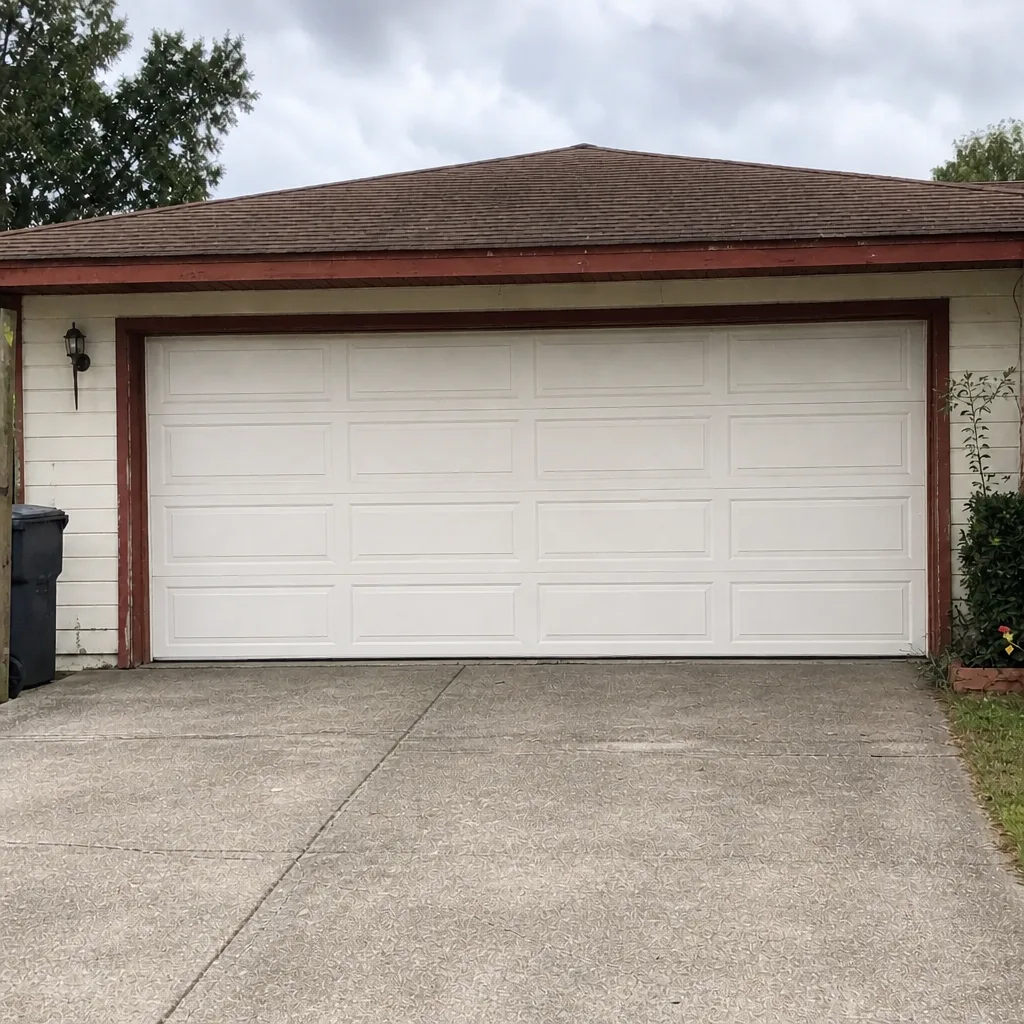 After
When to Call a Professional
Some of this checklist is meant for you and some of it is meant for a technician, and knowing the line saves both money and risk. Call a professional when you see a frayed cable, a spring with visible gaps, a door that suddenly feels heavy or slams down, or any damage to the springs or cables themselves. Call if the opener won’t reverse, if the safety sensors won’t stay aligned, or if the door goes up crooked or comes off its track. Call after storm damage, and call if the door binds, judders, or makes a new loud noise you can’t trace. These are the situations where a trained eye prevents a bigger repair down the line.
Brandon Garage Door Repair Pros offers free estimates in Brandon – call (866) 283-8512. We answer 24/7. Fast dispatch from 7am to 7pm, Sunday through Friday. The price is quoted and agreed before any work starts, so the written estimate is the price. When your garage door won’t move, neither does your day, and we’re set up to handle everything from a single worn component to a full replacement.
Frequently Asked Questions
Every 90 days, and closer to every 60 days during the hottest stretch of summer if the door gets heavy use. Heat here thins and dries ordinary lubricants faster than in cooler climates, so the schedule is tighter than most national checklists suggest. Use a silicone-based or purpose-made garage door lubricant and never grease the tracks. If your door starts squealing between scheduled lubrications, that’s a sign to look at the hinges and rollers more closely – call (866) 283-8512 if the noise doesn’t resolve.
Doors that seize or bind in late summer because of skipped lubrication and heat-driven wear, rather than the spring failures that dominate colder regions. Humidity adds rust on the hinges and rollers, and both problems build up quietly. Running the 90-day inspection and lubrication schedule prevents most of these failures. If your door has already seized, call (866) 283-8512 for a free estimate.
No. Garage door springs, especially torsion springs, are under extreme tension and can cause serious injury if handled incorrectly. A trained professional should always replace or adjust them, even though you can safely inspect them for wear. What you can do is watch for a gapped spring, rust, or a door that suddenly feels heavy, and then call. Our dedicated spring repair service handles this safely – call (866) 283-8512 and we’ll get you a written quote before any work starts.
Wave an object through the photo-eye beam while the door is closing and confirm the door reverses, then repeat with a block of wood to test the mechanical auto-reverse. Run both tests every 90 days and before storm season. If either test fails, the sensors or force settings need attention. Call (866) 283-8512 and we’ll diagnose it – estimates are free.
Mostly the same maintenance, but a few extras: keep the app and firmware updated, re-test the safety reverse after any power interruption, and check the sensor status in the app after storms. Smart openers from LiftMaster, Chamberlain, and Genie still rely on the same physical hardware, so lubrication and inspection matter just as much. If your smart opener acts up after a storm, call (866) 283-8512 for a free estimate.
No. We quote the work and agree the price before anything starts, and the written estimate is the price. If our inspection reveals something the initial quote didn’t cover, we tell you and get your agreement before doing that work. Call (866) 283-8512 for a free estimate – we answer 24/7. Fast dispatch from 7am to 7pm, Sunday through Friday, so you’re not stuck waiting while the door stays down.
The Bottom Line
A garage door checklist that ignores Brandon’s heat and humidity is busywork. The schedule that actually protects your door runs every 90 days, leads with lubrication and rust inspection, tests the safety sensors before storm season, and treats springs and cables as look-but-don’t-touch. Most of the repair calls in this climate trace back to a task that wasn’t on the standard list – the wrong lubricant, a skipped summer check, a rusty hinge that quietly stiffened. Run the walkthrough, follow the local calendar, and know when to stop and call. Our technicians have up to 9 years of experience, and we work on LiftMaster, Chamberlain, Genie, Clopay, Amarr, Wayne Dalton, Craftsman, and Raynor systems. Whatever brand you own, and whatever the door needs, one call covers it all. Call (866) 283-8512 for a free estimate. We answer 24/7. Fast dispatch from 7am to 7pm, Sunday through Friday. The price is quoted and agreed before any work starts.
Written by the team at Brandon Garage Door Repair Pros.