
Last updated November 21, 2026
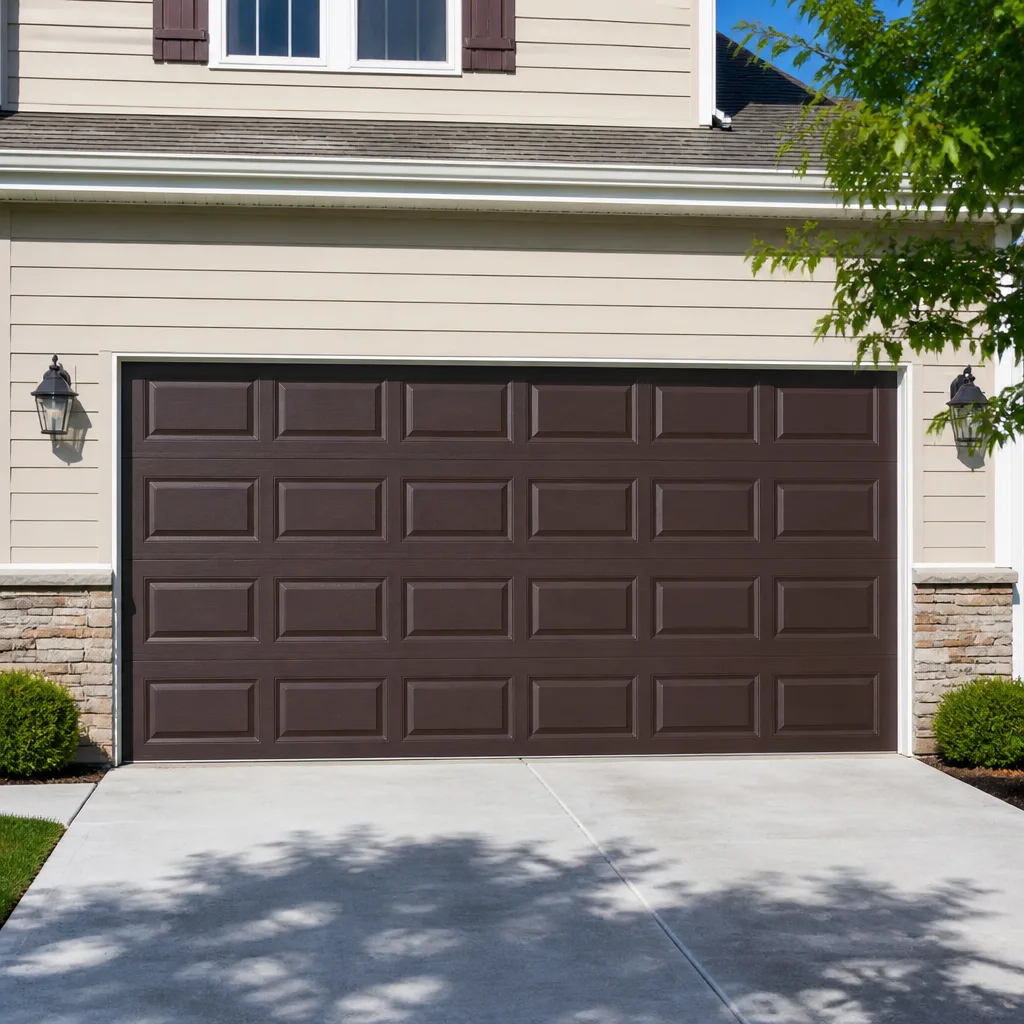 Raised-panel steel
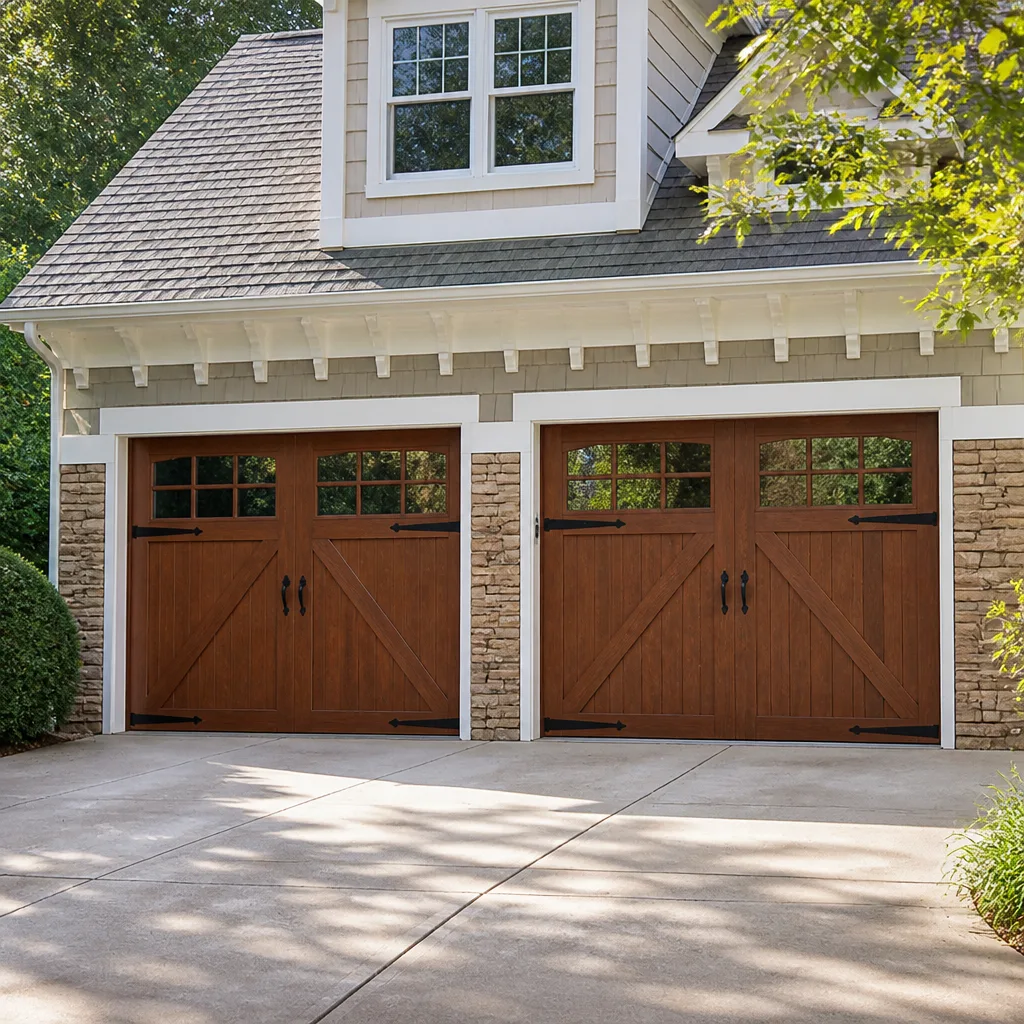 Carriage house
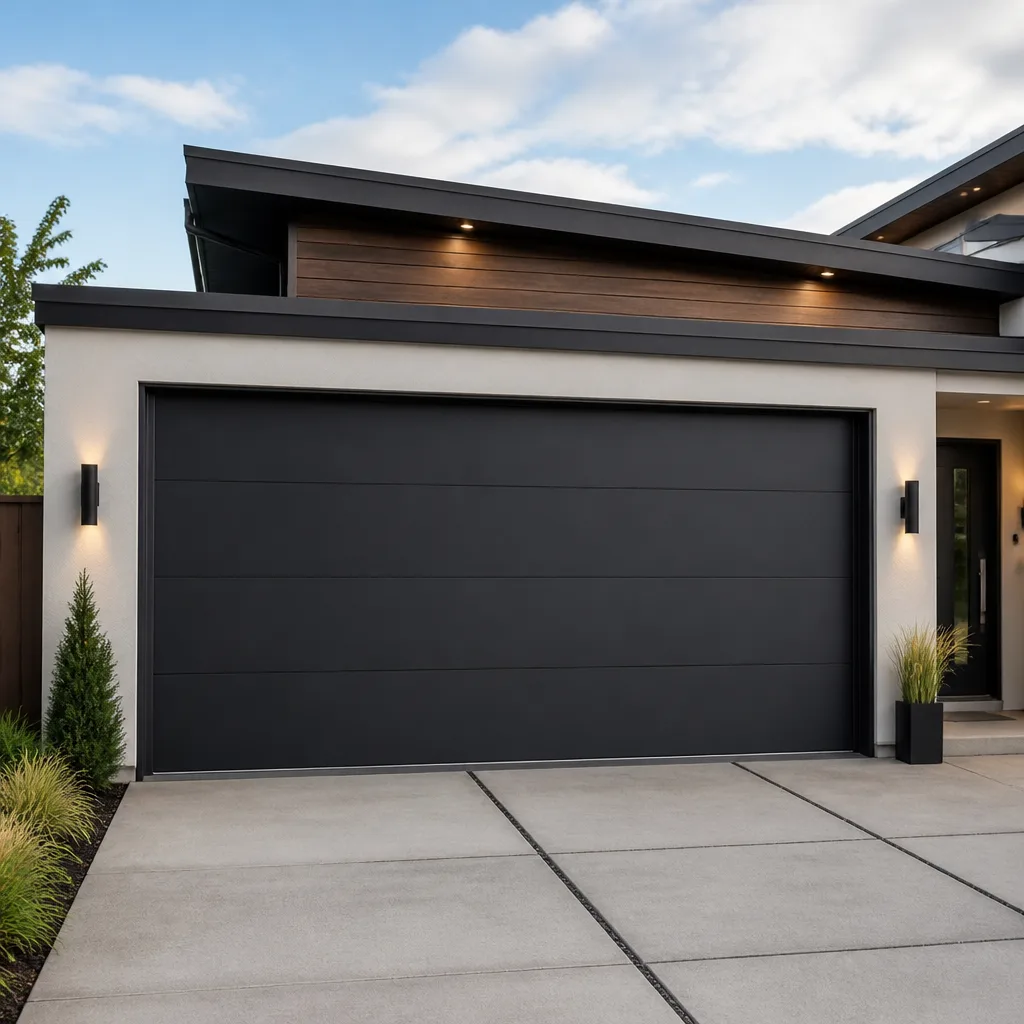 Modern flush
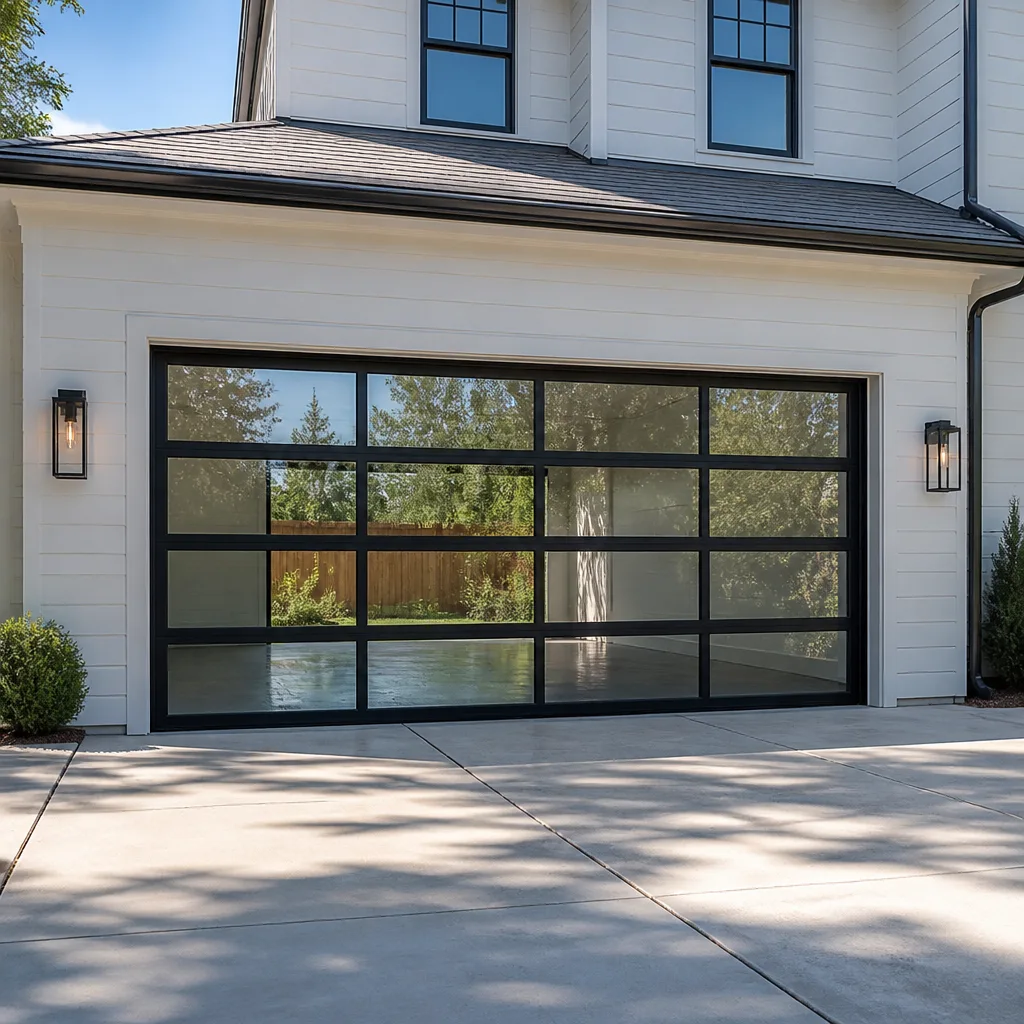 Full-view glass
 LiftMaster openers
 Chamberlain openers
Full 25-point door and opener safety check with every visit - springs, cables, rollers, tracks, and your LiftMaster or Chamberlain opener included
You get a price before we start. It does not change when the pro arrives.
Get your free estimateDIY vs Professional Garage Door: The Brandon Homeowner’s Decision Guide
Most homeowners think the DIY decision comes down to confidence. It doesn’t. Torsion springs run under 150 to 300 lbs of torque, and that single physics fact sorts garage door work into two piles: tasks where saving money makes sense, and tasks where one slip can break a wrist or worse. Confidence doesn’t move that line. Skill doesn’t either. What moves it is knowing which job you’re actually looking at. This guide breaks the work down task by task, covers what a good DIY attempt really saves against what a bad one costs, and explains the Florida rules that make some amateur repairs expensive even when they seem to work. If you own a home in Brandon, the sections on wind load and prior DIY finds will matter more than anything else here.
Quick Answer
Light garage door jobs – lubricating moving parts, aligning safety sensors, replacing weatherstripping, straightening minor dents – are reasonable DIY work for most Brandon homeowners. Spring replacement, cable work, and anything involving the torsion assembly are not, because the stored energy in those parts can injure you before you have time to react. Call a professional for springs, cables, off-track doors, and openers that fail after a lightning storm. A job that seems small but keeps the door under tension still belongs in the professional column.
Styles & brands we work with
- Raised-panel steel
- Carriage house
- Modern flush
- Full-view glass
- LiftMaster openers
- Chamberlain openers
Table of Contents
- Why Springs and Cables Are the Hard Line
- What Brandon Homeowners Can Safely Do Themselves
- The Real Cost Math: DIY Savings vs. Botched Repair Bills
- Florida Wind Load, Permits, and Your Insurance
- How to Tell If a Past DIY Repair Caused Your Current Problem
- Openers: Where DIY Gets Complicated
- A Five-Minute Test for Any Garage Door Job
- Common Mistakes to Avoid
- When to Call a Professional
Why Springs and Cables Are the Hard Line
Torsion springs hold the full weight of your door at all times. A standard single-car door weighs somewhere between 130 and 200 lbs, and a double-car door runs heavier still. The spring is what makes that weight manageable by hand. When the door closes, the spring winds tighter. When it opens, the spring releases and lifts. That means even with the door down and the opener unplugged, a wound spring is storing energy. It doesn’t care that you’re holding a wrench.
The danger is mechanical, not mysterious. Three things go wrong when an untrained person works on a torsion assembly:
- Winding bars slip. Torsion springs are tensioned with two steel rods inserted into the winding cone. If one rod isn’t seated fully, or if you let go with one hand, the stored torque spins the cone and throws the bar. A bar under load travels faster than a reaction.
- Cables snap under tension. Extension springs use a steel cable to stop a broken spring from flying across the garage. Those cables regularly fray. Cutting or loosening one under load is the same problem as the winding bar, just with more mass moving.
- The door drops. If the spring has already failed and the door is being held up by an opener or a pair of locking pliers, the failure point becomes the door itself. It’s heavy and it comes down fast.
We see this every week in Brandon. Homeowners are careful, they’ve watched the videos, they’ve bought the bars. And at some point during the job the spring decides the tension is released and it does what a spring does. This is why our garage door spring repair service is treated as a specialty, not a side task. A matched pair is usually what gets replaced, because a spring of the same age as its twin is already near the end of its cycle life. One spring on its own isn’t a repair, it’s a countdown.
What about extension springs?
These are the older style that run alongside the track and stretch instead of winding. They are still under significant tension, and the same rules apply. If your door has extension springs and one snaps, don’t try to remove the broken halves. Leave them hanging, keep the door down, and call someone.
When cables are the actual problem
A snapped cable usually shows up as a door that hangs crooked, comes off one side of the track, or lurches when the opener runs. The cable isn’t a wear part you can swap like a belt. It’s part of the load path, and it needs the door safely lowered before anyone touches it. If you see loose cable on the drum or a cable off the pulley, stop using the door and call a professional.
What Brandon Homeowners Can Safely Do Themselves
Most of the garage door is safe to work on. The dangerous parts are the springs, the cables, and anything that requires releasing tension. Everything else – the parts that touch air – is fair game for a homeowner with a ladder and a weekend morning.
Here’s the DIY list we’re comfortable telling people to try in Brandon:
- Lubricating rollers, hinges, and tracks. A light spray of white lithium grease on the hinges and a silicone spray on the tracks reduces noise and wear. Don’t grease the tracks themselves; the rollers need friction to stay seated.
- Aligning safety sensors. If the door refuses to close and the motor light flashes, one of the two sensors near the floor may have been bumped. Wipe the lenses, check the small indicator light on each, and nudge the bracket until both lights are solid. This is the single most common “door won’t close” call we get in Brandon, and it’s often a two-minute fix.
- Replacing bottom weatherstripping. The rubber or vinyl seal at the bottom of the door takes the hard Florida sun, cracks, and lets rain in. Most seals are a slip-on or nailed-on strip. A new one costs little and makes a real difference to drafts and water intrusion.
- Straightening small dents. A light dent in a steel panel can sometimes be worked out with a suction cup or by tapping from the inside. Cosmetic only. Don’t try this on a heavily creased panel; the metal has stretched and you’ll make it worse.
- Replacing opener batteries and remotes. Pairing a new remote is a homeowner task on LiftMaster, Chamberlain, Genie, and Craftsman openers, and most manuals walk you through it in a page or two.
- Cleaning and tensioning the safety reverse. Testing the auto-reverse is easy: lay a roll of paper towels under the door and let it close. If it pushes down on the roll without reversing, that’s a call.
Notice what isn’t on that list. No spring work, no cables, no track adjustment that involves lifting or tilting a panel under tension, and nothing on the opener’s internal gearing. Our garage door repair page is where most homeowners end up when a job on the safe list starts to feel bigger than it looked.
How lubrication should actually go
Every few months is enough in Brandon’s climate. Rollers first, then hinges, then the bearing plates at the ends of the torsion tube if you can reach them safely from a step stool. Don’t spray the tracks. The biggest mistake here is over-lubricating and ending up with grease all over the door panels and the floor.
The Real Cost Math: DIY Savings vs. Botched Repair Bills
Here’s where the arithmetic usually gets lost. Homeowners compare the price of a professional repair to the price of a part, decide the difference is the “labor markup,” and dive in. That’s the wrong comparison. The right comparison is professional repair vs. the chance of an amateur fix that either doesn’t last, causes a follow-on failure, or both. This table sets out how the math tends to run on the most common jobs in Brandon.
| Job | DIY reality | Where it leads |
|---|---|---|
| Bottom weatherstripping | Genuine savings. A simple, reversible job with no stored energy. | Done in an hour. No follow-on costs. |
| Sensor alignment | Genuine savings. Usually a nudge and a wipe. | Nothing follows. |
| Lubrication | Genuine savings. Costs a can of spray. | Nothing follows. |
| Panel dent repair | Mixed. Small dents sometimes come out. Big ones stretch the metal. | A stretched panel means a new section, and on some models a whole door. |
| Opener limit switch adjustment | Mixed. A homeowner can make the door travel the wrong distance. | The door slams the floor or stops short, strains the opener, and sometimes damages a panel. |
| Spring replacement | High risk of injury. Springs are under load and the tools are specialized. | Best case, an unbudgeted professional repair. Worst case, a hospital trip. |
| Cable replacement | High risk. Cables hold the door up during a spring failure. | A door that drops, bent panels, sometimes a full replacement. |
The pattern is clear when you read it as a list. DIY on the top rows saves real money. DIY on the bottom rows risks money and personal safety at the same time. And when the bottom-row job goes wrong, the follow-on repair usually runs higher than the original professional quote would have. A bent door panel from a dropped door, a twisted torsion tube from a slipped bar, and a burnt-out opener from a door that fought its motor on every cycle all cost more than the spring job they were meant to replace.
Pricing for garage door work always depends on what’s actually on the door – spring size, door weight, opener model, panel availability – so the honest way to compare is to get a written estimate and hold it against the DIY figure. If the professional number is close to the DIY cost and the job is on the bottom of that table, the decision is easy. Every quote we send is per job with no surprises after the fact. The written estimate sets the price, and nothing gets added once work starts.
Parts availability in Brandon
Springs come in sizes defined by wire gauge, inside diameter, and length. Walk into a hardware store with a broken spring and you may find something close. Close isn’t good; a mismatched spring will cycle wrong, wear out faster, and throw off the door’s balance. LiftMaster and Chamberlain openers are widely stocked, but Clopay and Raynor door sections usually aren’t, and that turns a small panel repair into a special order.
Florida Wind Load, Permits, and Your Insurance
Florida building code treats garage doors as part of the home’s wind-resisting envelope. That has consequences for DIY work that homeowners elsewhere don’t face. Any change to the door, its mounting, or its hardware has to keep the assembly performing the way it was approved for the home. Replacing springs that were specified for the door’s weight and wind rating is a real job with real documentation. Shopping for a generic spring because it looks close enough can change how the door behaves under wind load. It can also complicate an insurance claim if the door fails later and the adjuster asks who installed the parts and with what.
Permits vary by municipality. Some jurisdictions require a permit for a full door replacement. Ask the city’s building department before scheduling any replacement, and don’t rely on what a neighbor was told last year. The rules and the forms change. If you’re replacing a door rather than repairing one, our Brandon Garage Door Repair Pros page covers the full scope of what a replacement involves.
Insurance carriers care about impact-rated doors on wind-borne debris regions, and a DIY swap that loses the original rating sticker or approval label is the kind of thing an adjuster notices. A door that came with the home and matches its wind rating should be replaced with one that matches. If you’re not sure what the door was rated for, that question alone is worth a call.
What stays in the DIY column here
Weatherstripping, sensor alignment, and lubrication don’t affect the wind envelope, so they stay safely in the homeowner’s column in Brandon. The moment a spring, a track bracket, a panel, or the whole assembly is involved, you’re in permit-and-code territory.
How to Tell If a Past DIY Repair Caused Your Current Problem
We’ve walked into more than a few Brandon garages where the current failure started with a previous homeowner’s fix. The pattern doesn’t take long to spot once you know what to look for.
Here’s what a technician checks when a repair we’re called for doesn’t make sense on its own:
- Spring color codes. Painted stripes on the spring indicate gauge and size. If the colors don’t match what the door’s weight calls for, the spring is wrong, and the door has probably been straining against it since it went on.
- Mismatched springs. A pair should be equal in size, gauge, and cycle life. A visibly different spring on one side means someone replaced one and not the other, which overloads the newer spring.
- Fresh drill marks, stripped screws, or bent brackets. Hand tools leave signatures. A track bracket that’s been pushed out and re-bolted is often a home repair attempt.
- Winding cones with slip marks. Scratches around the set screws on a torsion cone mean winding bars were used, possibly by someone without the right feel for the tension.
- Opener force settings cranked to maximum. If a previous owner turned up the opener’s force adjustment to compensate for a heavy door, the motor is now overworking and will fail earlier.
- Sensor brackets on one side of the floor. Sensors should be at matching heights. Mismatched brackets suggest a do-it-yourself alignment that never quite got it right.
In our experience, the most common root-cause pattern is a spring replaced with the wrong size, followed by an opener forced to fight a door that’s out of balance. Both look like a new failure. Both trace back to the first repair.
Openers: Where DIY Gets Complicated
Opener work splits cleanly. The outside stuff is safe. The inside stuff isn’t.
Safe for a homeowner: changing a remote battery, pairing a new remote, wiping the safety sensor lenses, checking the travel limits by hand, and confirming the auto-reverse works. On LiftMaster, Chamberlain, and Genie openers these are straightforward chores with real value.
Better left to a technician: any internal repair, gear and sprocket replacement, logic board swap, chain or belt tensioning on a unit that’s already been adjusted once, and any case where the opener was running fine and suddenly stopped after a thunderstorm. Opener motors carry line voltage, and the internal capacitors hold a charge after the breaker is off. This is why our garage door opener repair service is separate from the door work – it’s a different skill set with different risks.
Smart openers in particular
We work on LiftMaster, Chamberlain, Genie, and Craftsman openers every week, including the connected models that pair with phone apps and home assistants. When a smart opener misbehaves, the issue is usually either a firmware setting, a weak wifi signal in the garage, or a door that’s out of balance and forcing the motor to work harder than it should. Two of those three are technician problems. A homeowner can reset the unit and re-pair the app, but if the issue returns, it’s worth a look before it turns into a motor replacement.
A Five-Minute Test for Any Garage Door Job
Here’s a simple decision test you can run before you open a toolbox. It works on any garage door in Brandon, whatever the brand.
- Does the job involve releasing tension? Springs, cables, winding cones, and the torsion tube all count. If yes, that’s a professional job. Full stop.
- Does the job involve lifting the door or a panel off the track? If yes, professional. A door that comes off the track under its own weight is not something to handle alone.
- Does the job touch line voltage inside the opener? If yes, professional. The electrical panel is a hard line.
- Does the job change the door’s structure, weight, or mounting? If yes, check your local permit rules first, then call someone.
- Is the job entirely cosmetic or handling-only? If yes, DIY is fine. Weatherstripping, sensor alignment, and lubrication all pass.
- Do you have to guess at the part? If the right spring, cable, or panel isn’t clearly identified by the door’s labels, professional.
If you get to step six and you’re still not sure, that’s the answer. A confident guess on a garage door isn’t worth the downside.
Common Mistakes to Avoid
- Cutting a spring or cable to relieve tension. This is one of the most dangerous mistakes a homeowner can make. The release is violent and it happens too fast to react to. Leave the broken parts in place and call a technician.
- Replacing one spring and not the other. Paired springs wear out together. A new spring next to an old one means the old one gets more of the load and fails soon after. This is the most common “we just had this fixed” call we get in Brandon.
- Turning up the opener’s force setting to fix a heavy door. Force adjustment exists for small tolerance changes, not for compensating for a bad spring or cable. It wears the motor out and hides the real problem.
- Greasing the tracks. It seems helpful. It isn’t. The rollers need friction with the track to stay seated and aligned. Grease makes the door less stable, not more.
- Replacing a door without checking the permit requirement. In Brandon and the surrounding county, some replacements need a permit and some don’t. Guessing wrong can create a headache at resale or at claim time.
- Installing a non-rated door on a rated home. If your home was built with an impact-rated door, swapping it for a standard one is a wind-compliance problem, not just a cosmetic one.
- Ignoring small sounds. A single loud pop from the torsion tube usually means a spring has just failed. Keep the door down, don’t run the opener, and call.
When to Call a Professional
Call a professional when any of the following is true: the door comes off the track, the spring snaps or takes on a strange shape, a cable goes slack, the opener sparks or smells like burnt plastic, the door drops faster than it should when you release the opener, or a storm has left the door refusing to close. Any of these can turn a small job into a larger one if the door keeps running. Our technicians have up to 9 years of experience and we work on Raynor and LiftMaster doors among the full lineup of brands, so most of what you own we’ve already seen.
Brandon Garage Door Repair Pros offers free estimates in Brandon – call (866) 283-8512. We answer 24/7. Fast dispatch from 7am to 7pm, Sunday through Friday. Same-day service is often possible on repair work.
See the difference
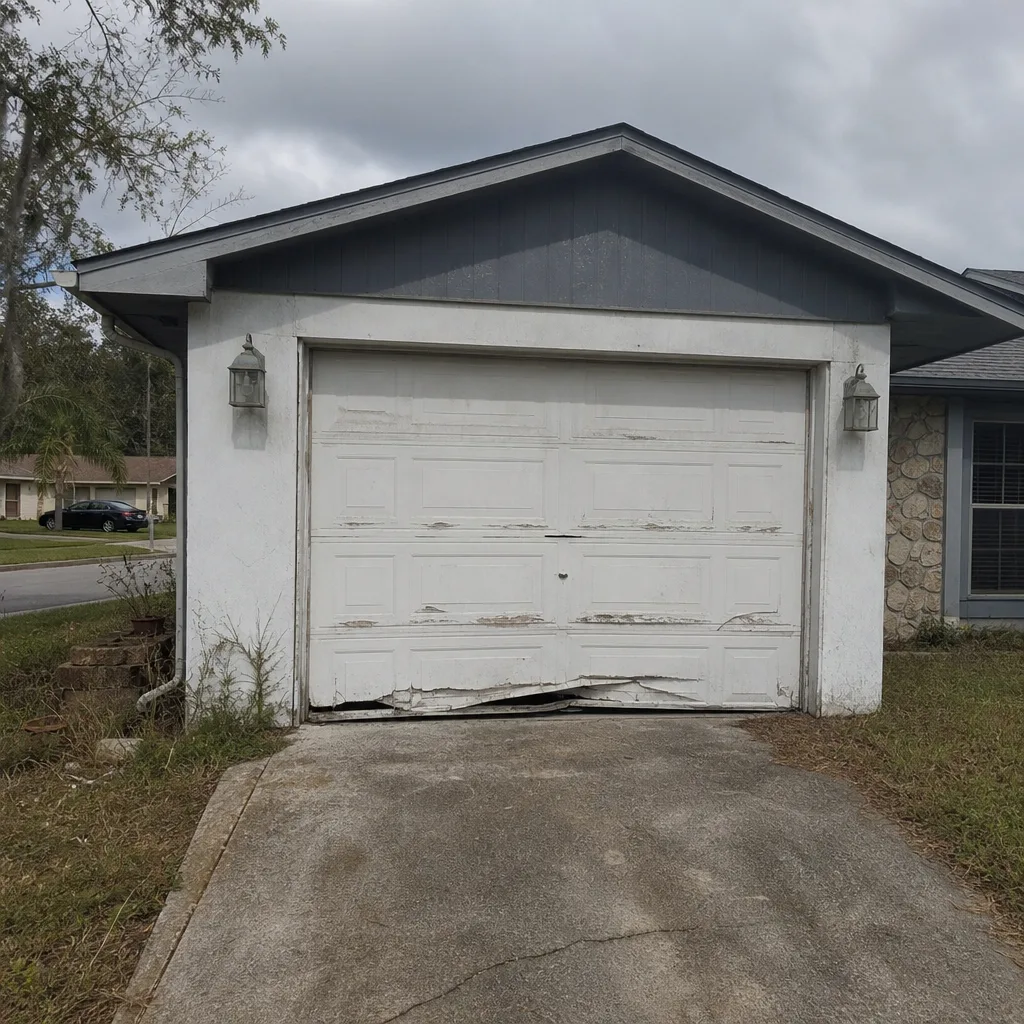 Before
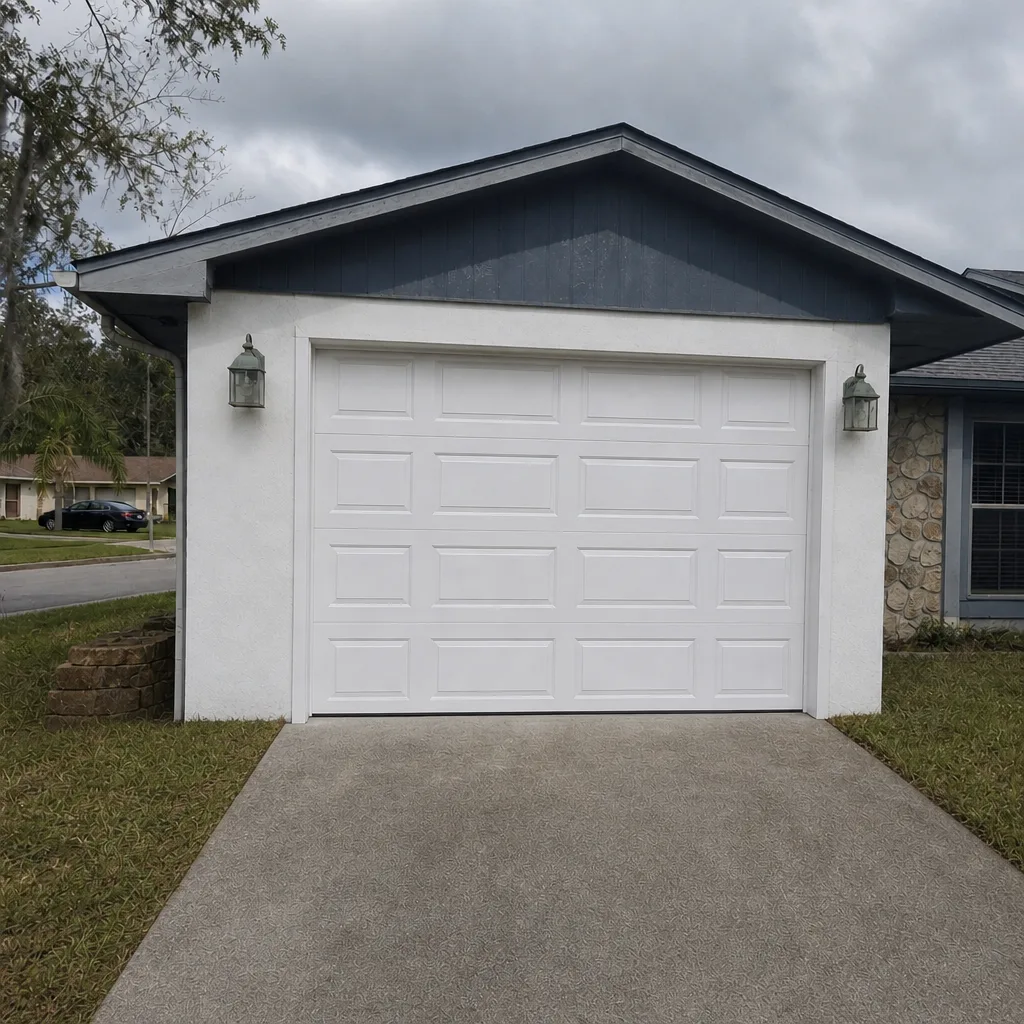 After
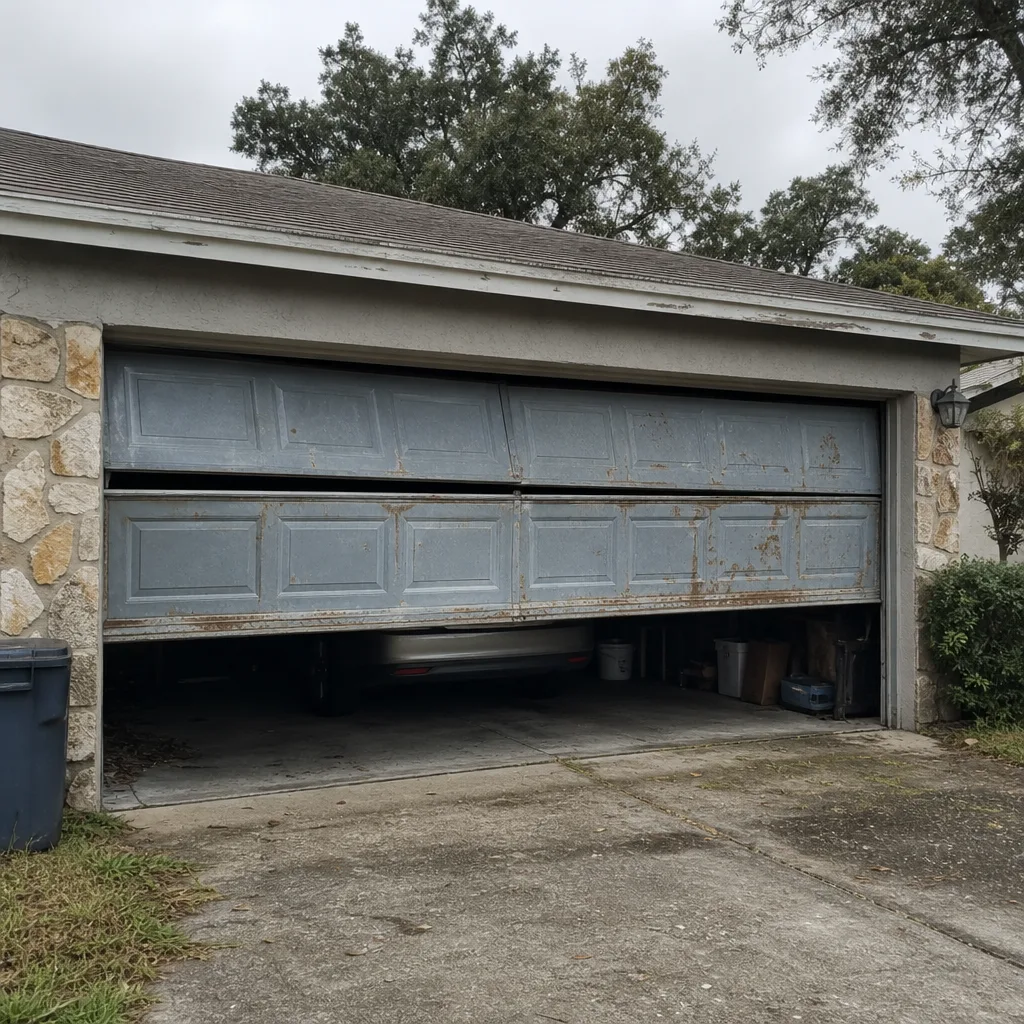 Before
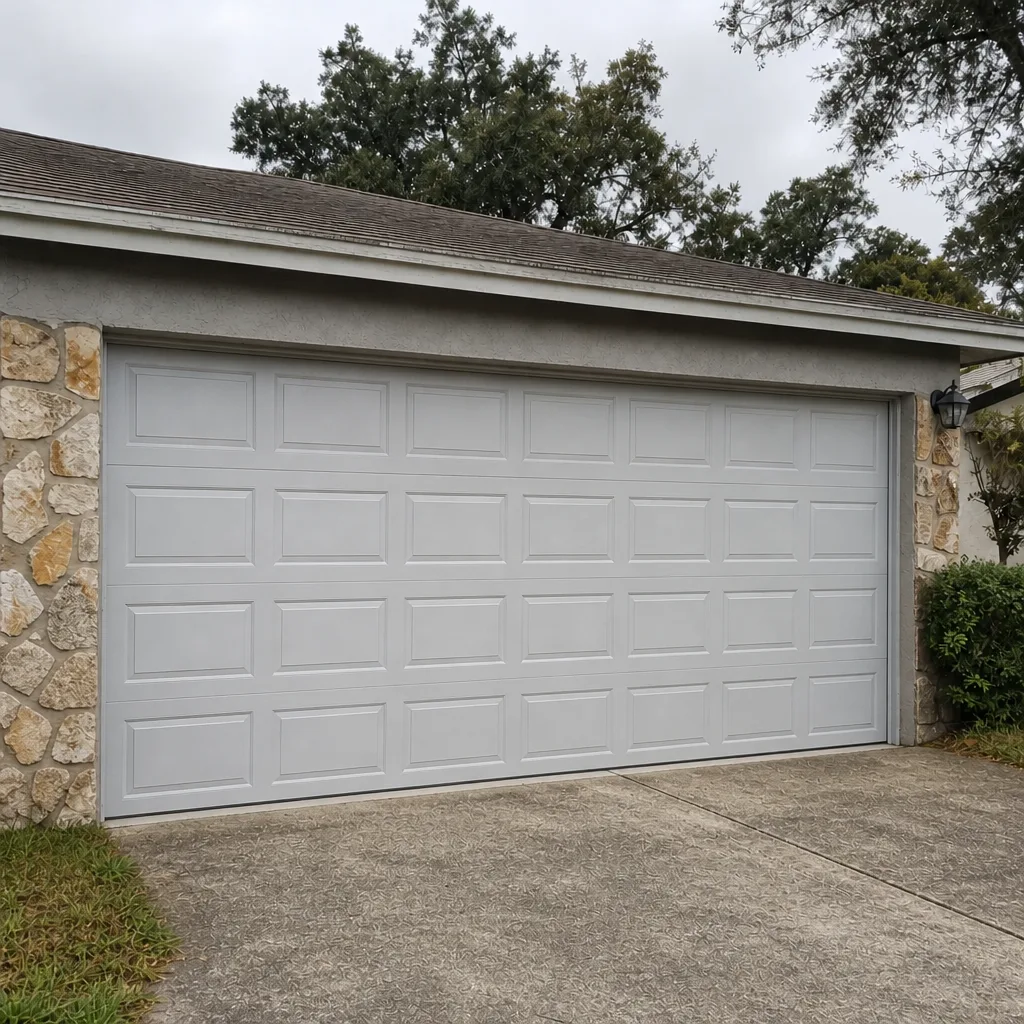 After
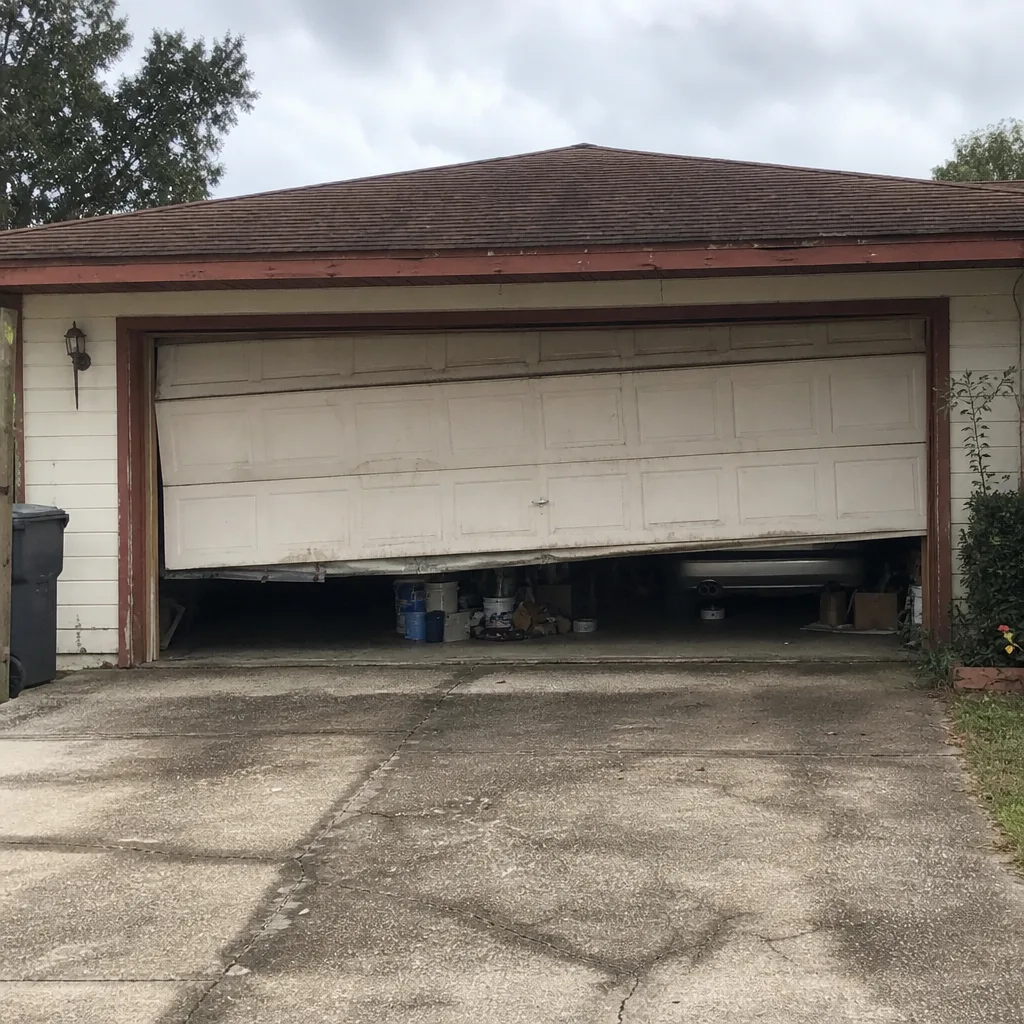 Before
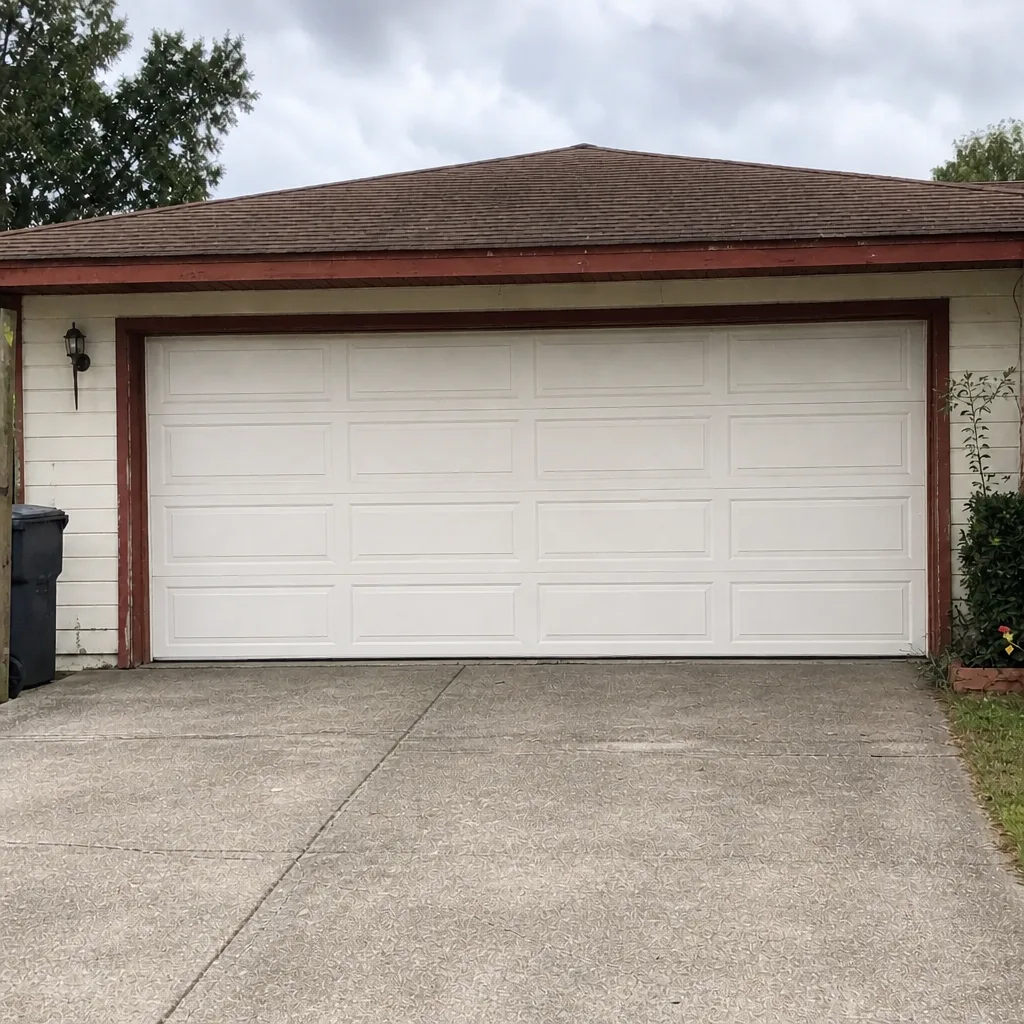 After
Frequently Asked Questions
Torsion and extension springs are under heavy load even when the door is closed, so untrained spring replacement carries a real risk of serious injury. The safe and permanent fix is a professional spring replacement, which also lets the technician match the correct spring to your door’s weight. Call (866) 283-8512 for a free estimate in Brandon.
The cheapest repair is usually the one that matches the actual problem, which is why a free estimate comes before any work. Homeowners who diagnose by guess often end up paying for two repairs instead of one. Call (866) 283-8512 for a free written estimate before you buy any parts.
It can. A door replacement or a spring change that affects the door’s wind-rated hardware can create questions at claim time, especially if the replacement parts don’t match the door’s original approval. Ask your city’s building department about permits before signing off on any structural change, and call (866) 283-8512 if you want a professional to look at the door first.
Spring color codes, mismatched springs, fresh bracket marks, and an opener that’s been set to maximum force are the usual signs we check. If the door has been running against a wrong-sized spring or a door out of balance, replacing the actual part usually fixes it. Call (866) 283-8512 and we’ll take a look.
Yes, at least for the initial visit, because we need access to the door, the opener, and any paperwork for a permit-related job. We confirm timing by phone before dispatch. Call (866) 283-8512 to schedule.
Often, yes – spring replacements, sensor fixes, and cable repairs are typically workable the same day once a technician looks at the door, depending on parts. If the job needs a special-order door or panel, that’s a scheduled visit and we’ll give you a written quote first. Call (866) 283-8512 to find out for your door.
The Bottom Line
The DIY question is not about whether you’re handy. It’s about whether the job involves stored energy or a load-bearing part. Weatherstripping, sensor alignment, lubrication, and minor dent work are all yours, and you’ll save real money on them. Springs and cables are a hard no at any confidence level. Between those poles sit the opener internals, the panel repairs, and the wind-rated hardware changes, and those are best done after asking two questions: is the part clearly identified, and does a permit come with it? Answer those honestly and the rest sorts itself out. If you’re not sure, get a free written estimate first – the price is set before any work starts, so there’s no surprise at invoice time.
Written by the team at Brandon Garage Door Repair Pros.